Regenerative Materials
❋ Natural Material Space Divider
❋ Sawdust Space Divider
❋ Offcuts Vase Collection
Natural Material Space Divider
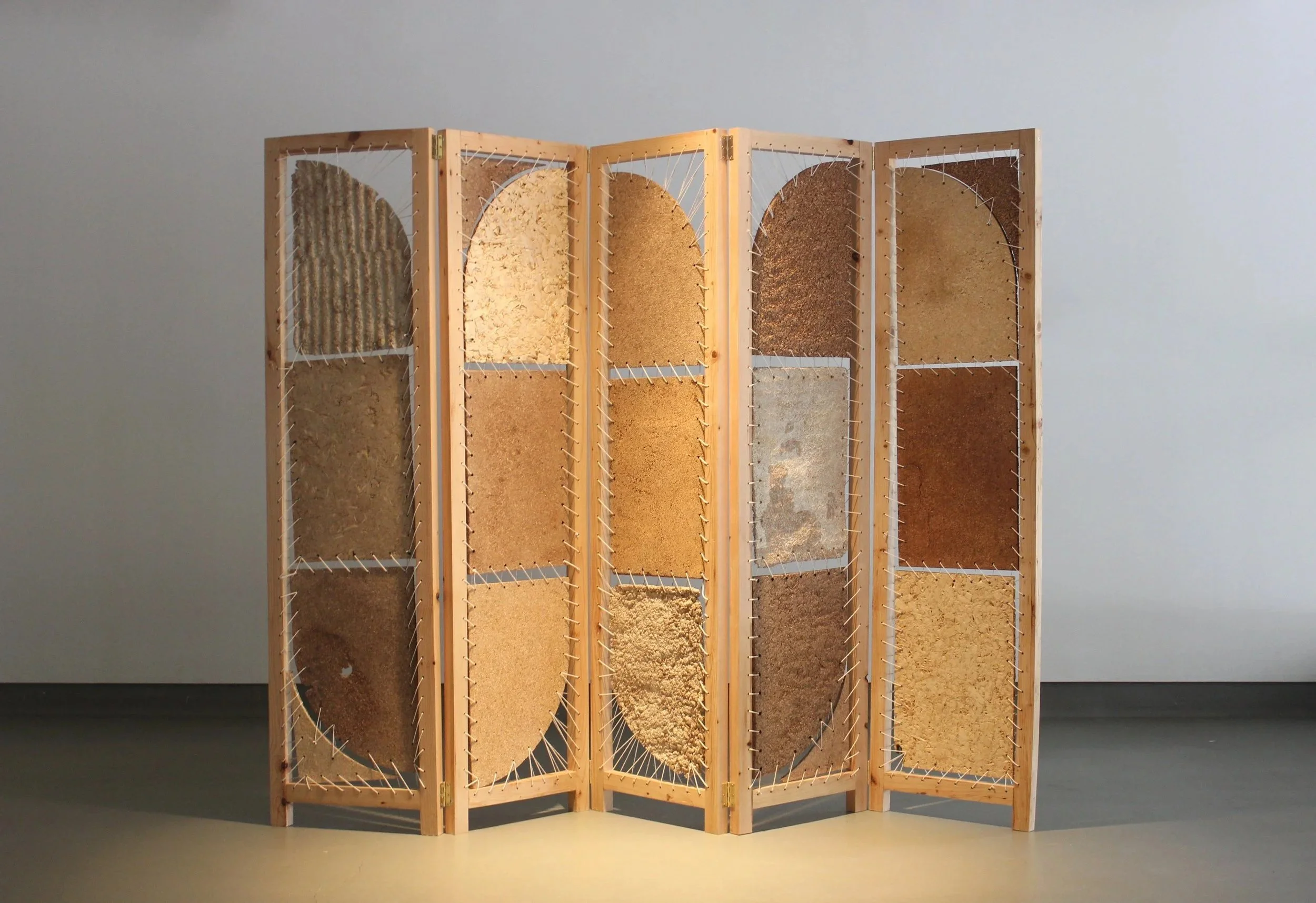
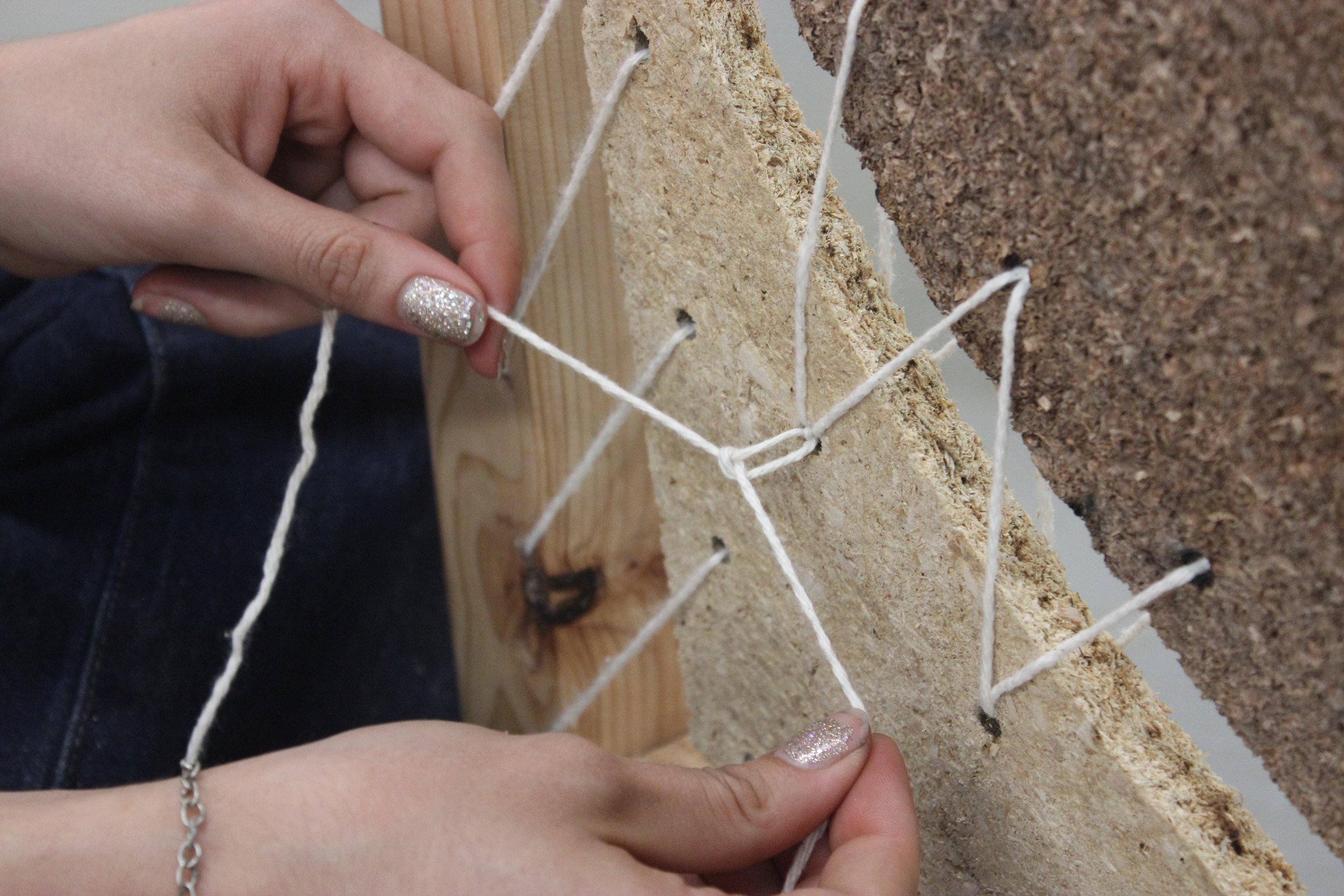
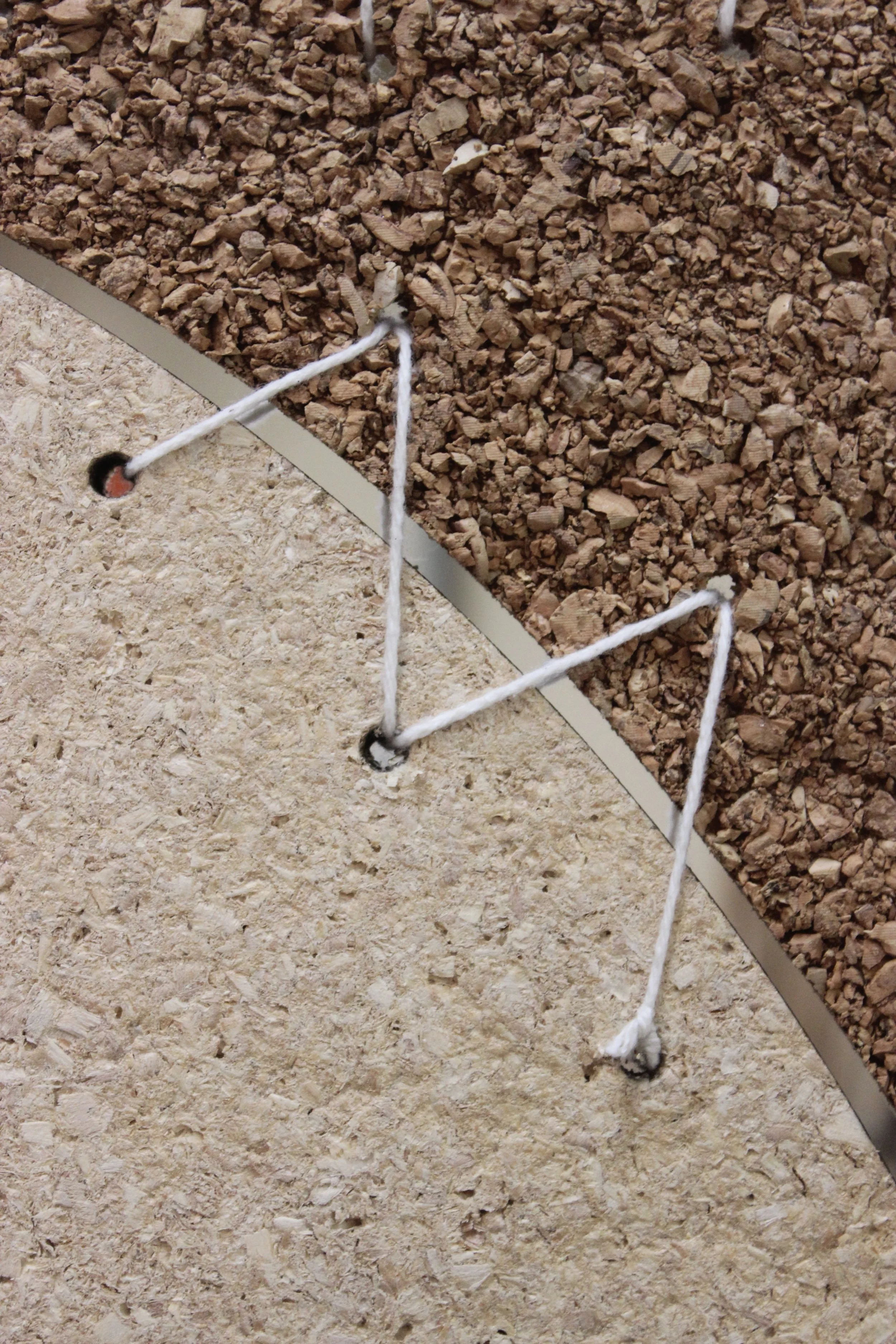
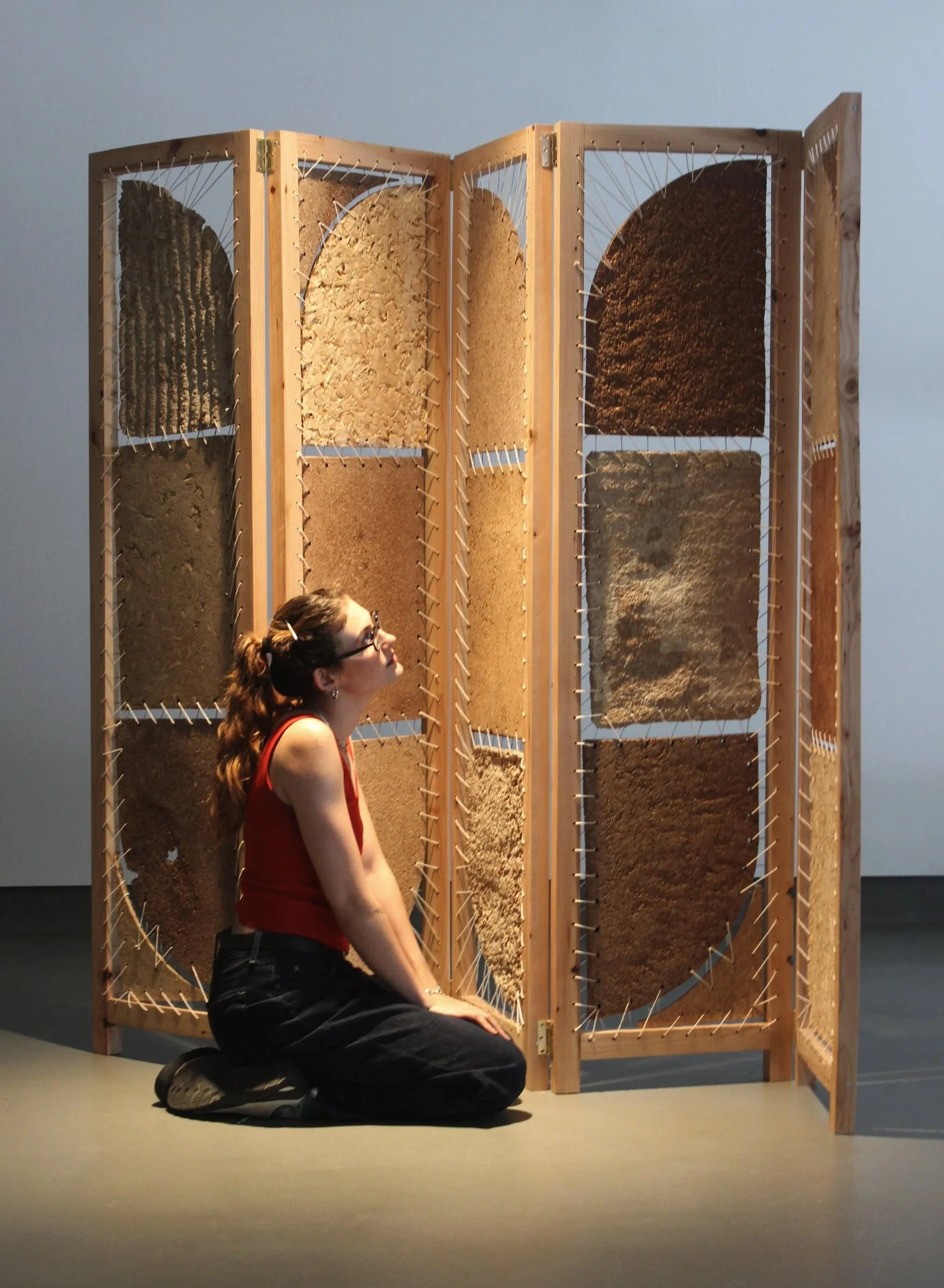
The Natural Material Space Divider uses 100% natural materials. Sawdust, wood shavings and ground up post-consumer wine corks are mixed with a solution of water and agar agar. Once the batches of mixed bio-composite paste are laid out into flat sheets and dried, they are laser cut into uniform rectangles with holes along the edges. The sheets of mycelium are made by laying moist reishi mycelium substrate into flat sheets and texturing them, then dehydrating them to solidify the form. They are then hand cut. Each panel is laced into the fir wood frame using cotton yarn. The divider can be fully disassembled and either repurposed for other uses or composted.
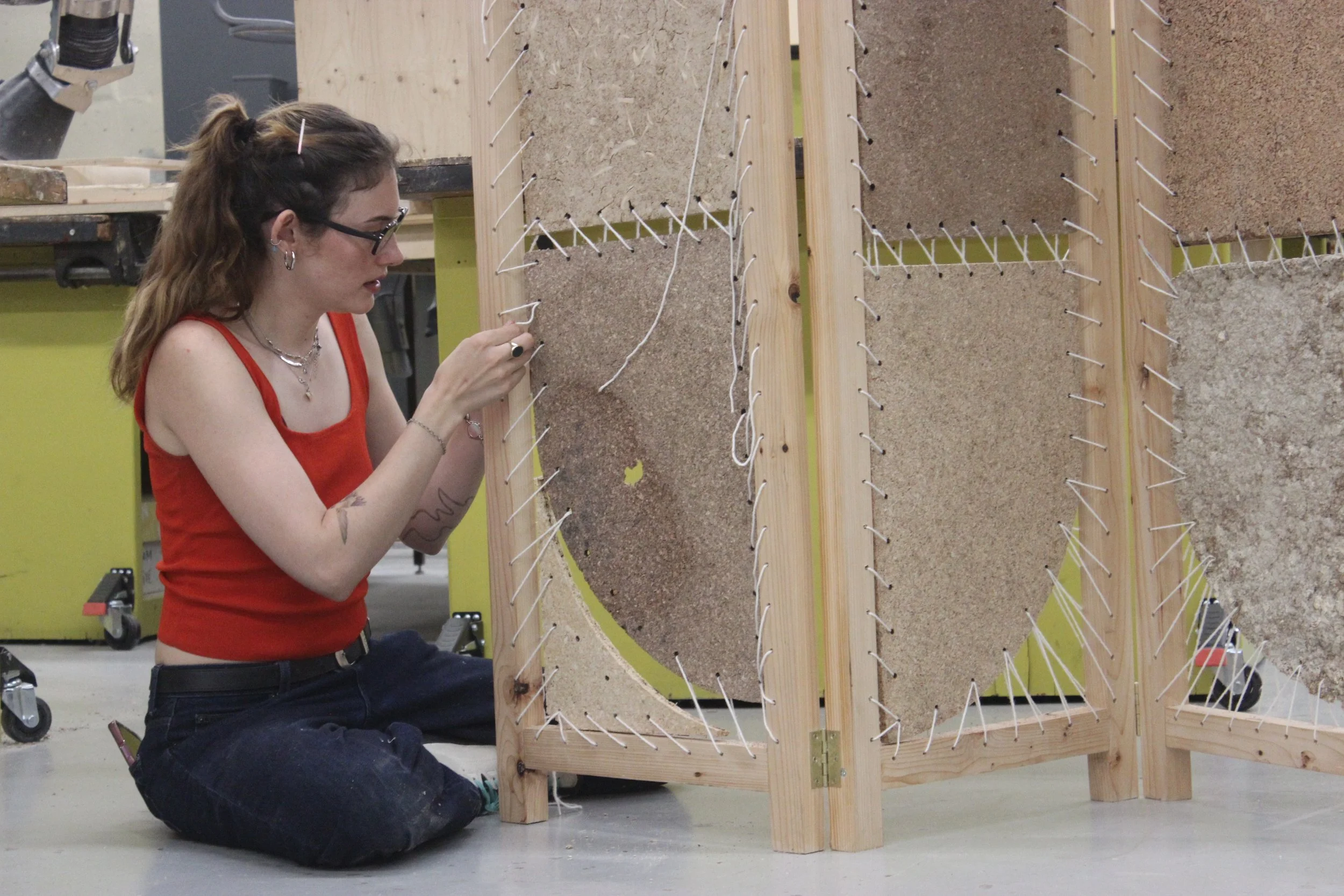
The dedication to only using natural materials and to design for disassembly requires a unique approach to fabrication. Each panel was created from scratch using recovered waste products. Instead of using prefabricated solid materials, creating panels using repurposed materials investment of labour, time and respect for the material.
5-panel, accordion fold divider that can be moved by one person
Uses only natural materials that can biodegrade or be reused
Has no fixed joinery - all pieces can come apart to be disposed or repurposed
Has a neutral colour scheme that allows natural textures and the contrast between shades to stand out
Photos by Cato Usher. Made with technical support from Félix Beaudry. Custom Made for the Atélier Écodesign at the Cégep du Vieux Montréal, Canada.
2025
70” x 105” x 2”
Fir wood, cotton yarn, sawdust, wood shavings, post-consumer wine corks, agar agar, mycelium, beeswax polish

Sawdust Space Divider
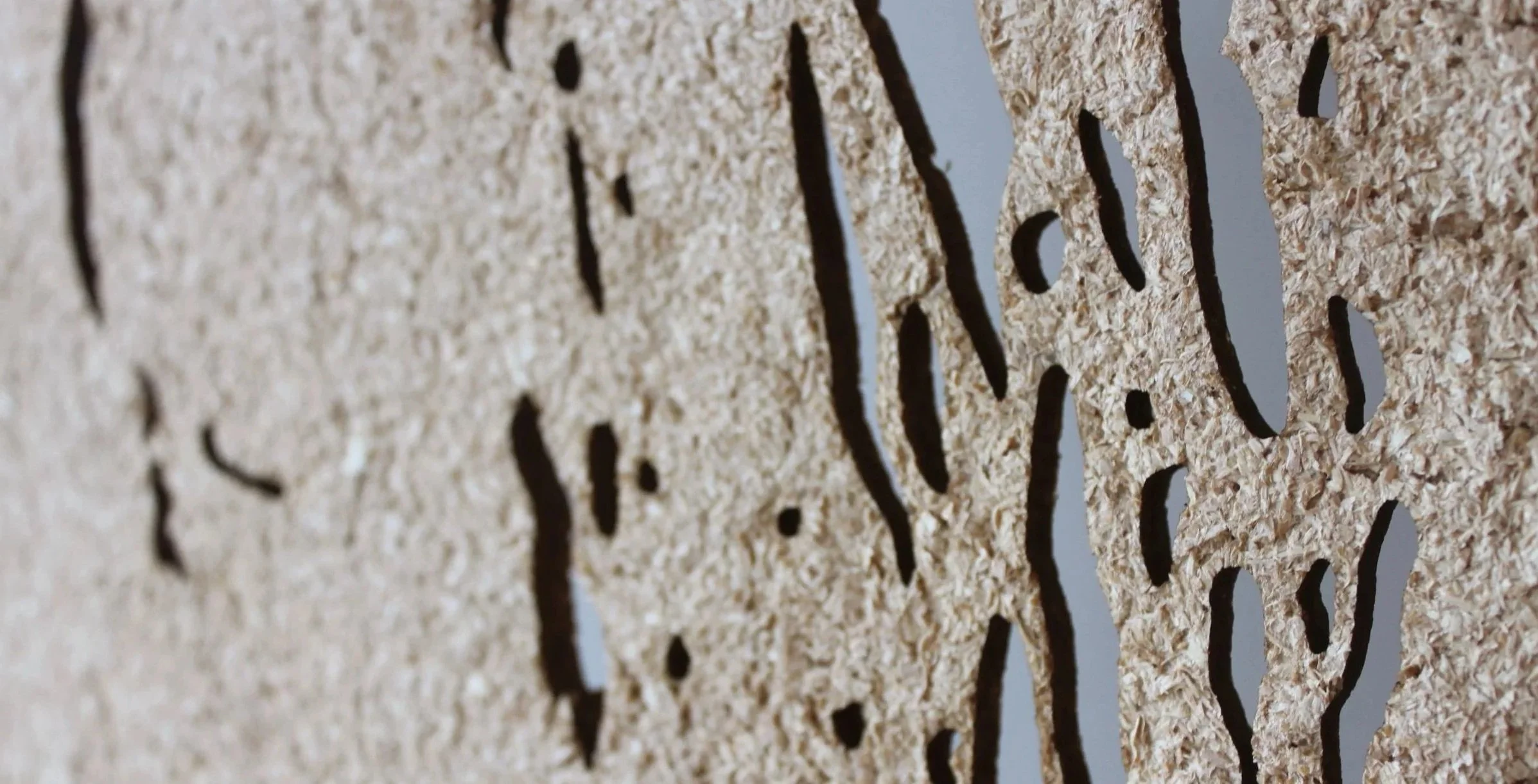
The Sawdust Space Divider combines a solid cherry frame with panels made with a sawdust and agar agar bio-composite. The system is modular and can disassemble: the panels hang from the frame with wire and can be placed in any position in the frame and the frame disassembles into 12 pieces. The panels were made using sawdust from the Concordia University CTC Wood Shop, and agar agar. They are then formed, baked and laser cut into their final forms. The cut out patterns originate from cross sections of ambrosia maple. Ambrosia beetles are nature’s wood workers - they manipulate wood by tunneling through it and using it for their shelter. The Sawdust Space Divider unites solid wood and its waste product, sawdust, into one object where the materials complement each other’s materiality.
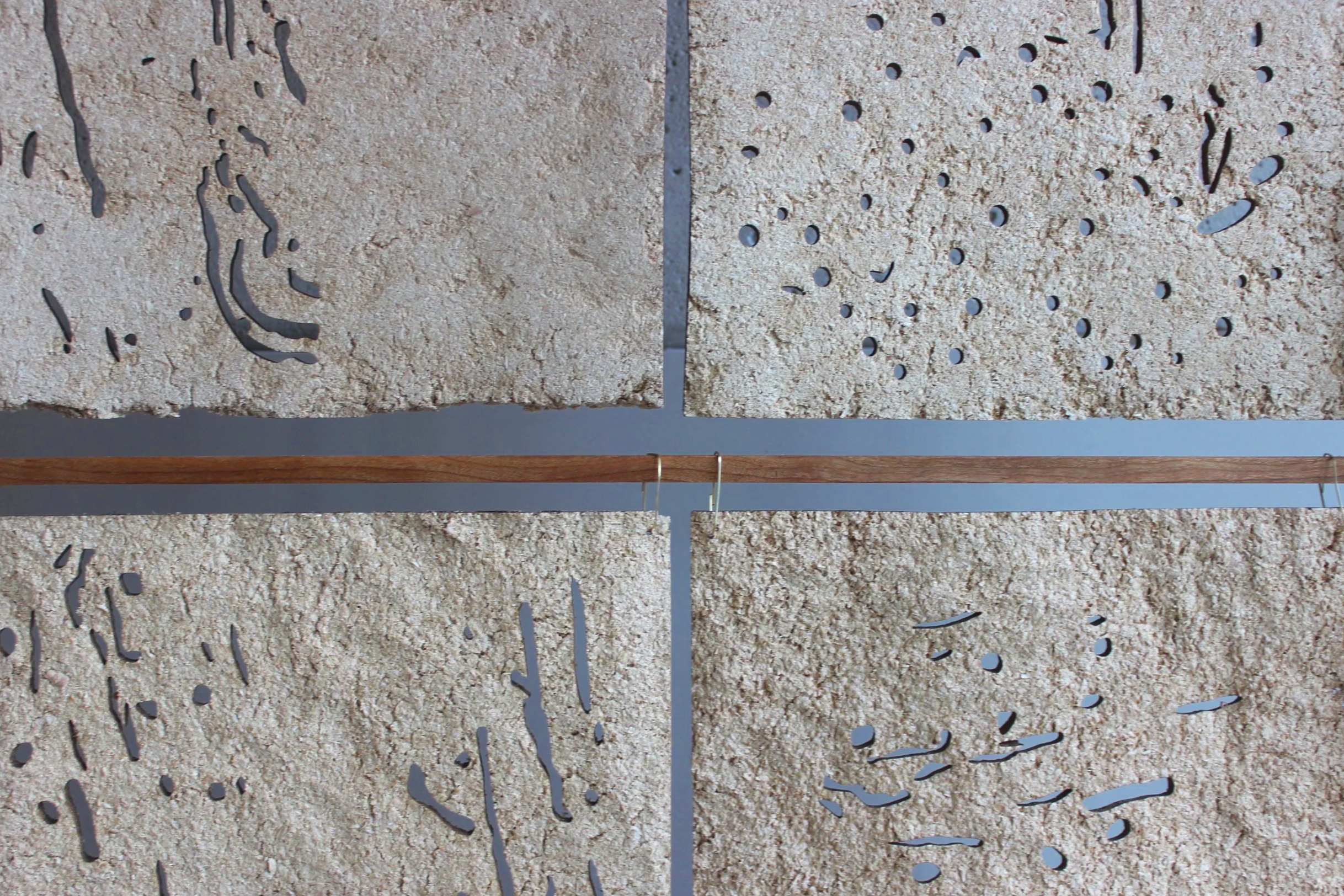
The panels hang from the frame with wire and can be placed in any position in the frame
The frame comes apart into twelve pieces and six bolts, it can be assembled and disassembled easily by one person
Incorporates patterning from Ambrosia Beetle bore hole forms to represent organic beauty


2025
70” x 29” x 12”
Cherry, sawdust, agar agar, wire, beeswax and linseed oil finish

Offcuts Vase Collection
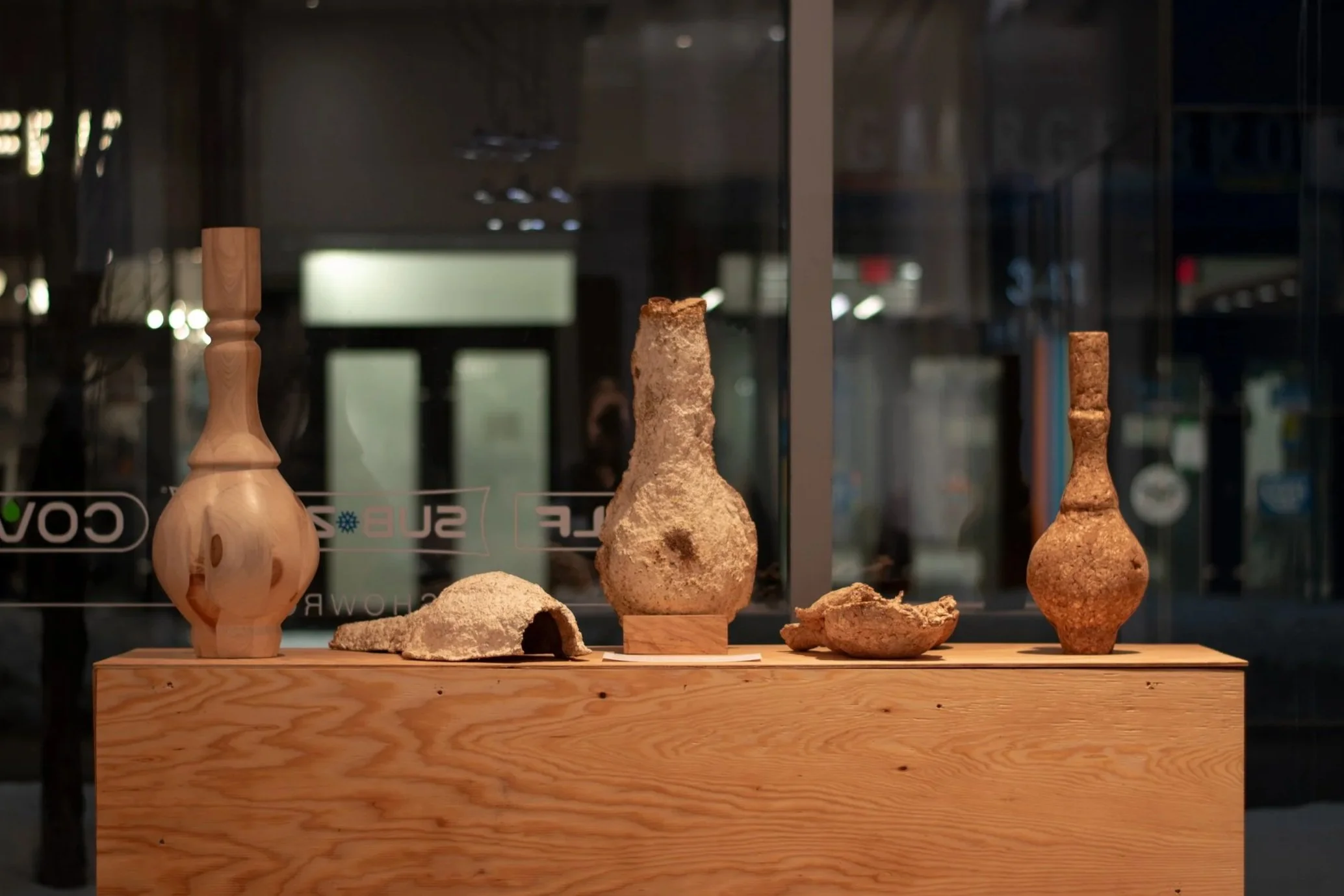
Using the wood shavings produced while carving the Offcuts Vase on the lathe, the Sawdust Vase Collection attempts to repurpose said waste into a functional object. The Mycelium Cast made of the wooden vase is used to form the sawdust vase.
This experiment proved that it is possible to create a replica of an object without the use of non-renewable or non-biodegradable materials.
Create a design process where one object is informed by the one previously made
Develop a method for using the mycelium cast to mold the sawdust composite without it sticking to the cast/not having a clean removal
Instead of using the sawdust composite to create flat sheets as in other projects, explore how it behaves and solidifies as a 3D object with varying thicknesses and organic shapes
Photo from Offcuts Vase Collection display at Sub-Zero, Wolf and Cove Showroom as part of DesignTO Festival 2026, Toronto.
Photo by Anna Jasinska.
*Offcuts Vase is found under ‘Wood’ section of the website
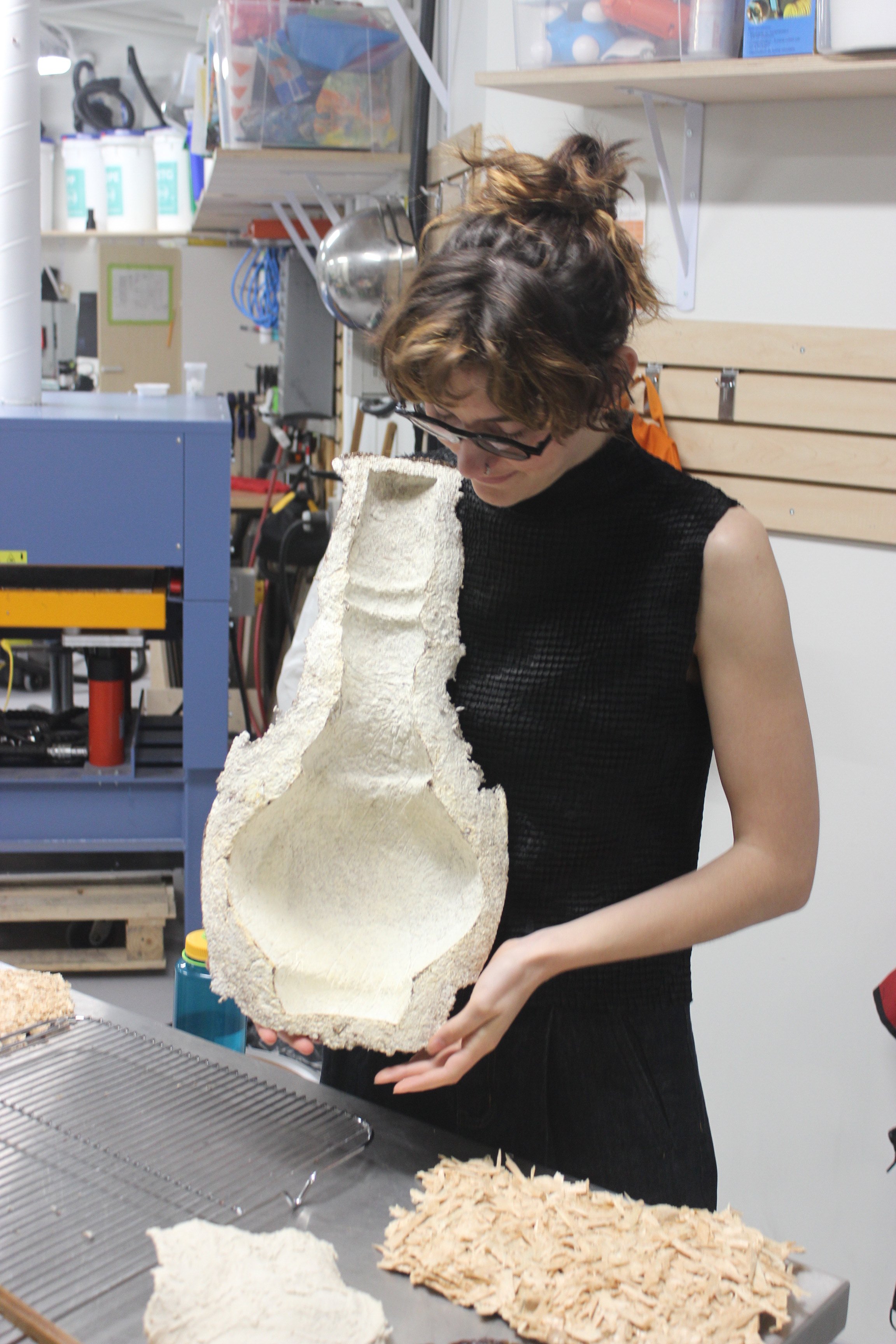
Mycelium Cast of Offcuts Vase
The Mycelium cast captures the form of the Offcuts Vase. The mycelium is grown using a substrate of sawdust, soy husk, used coffee grounds, water and reishi mushroom inoculation liquid. After growing in jars for three weeks, the mycelium is decanted and hand mixed before it can be applied to a mold. Once it has been molded over the target form, it is covered in plastic where it will sit for a week, growing into a solid. The cast is then removed from the form and is left to air dry for another week, before being put in a dehydrator to remove all liquid. Mycelium is 100% natural and biodegradable. Using it as a casting material allows for forms to be replicated with incredible detail without creating unnecessary waste. Mycelium works as a viable casting material which accurately captures details. It allows for multiple types of natural materials to be reused rather than remaining as a waste product. This work rejects the use of non-regenerative sculptural casting materials like plaster and silicone.
2025
22” x 10” x 6”
Reishi mycelium, sawdust, soy husk, used coffee grounds
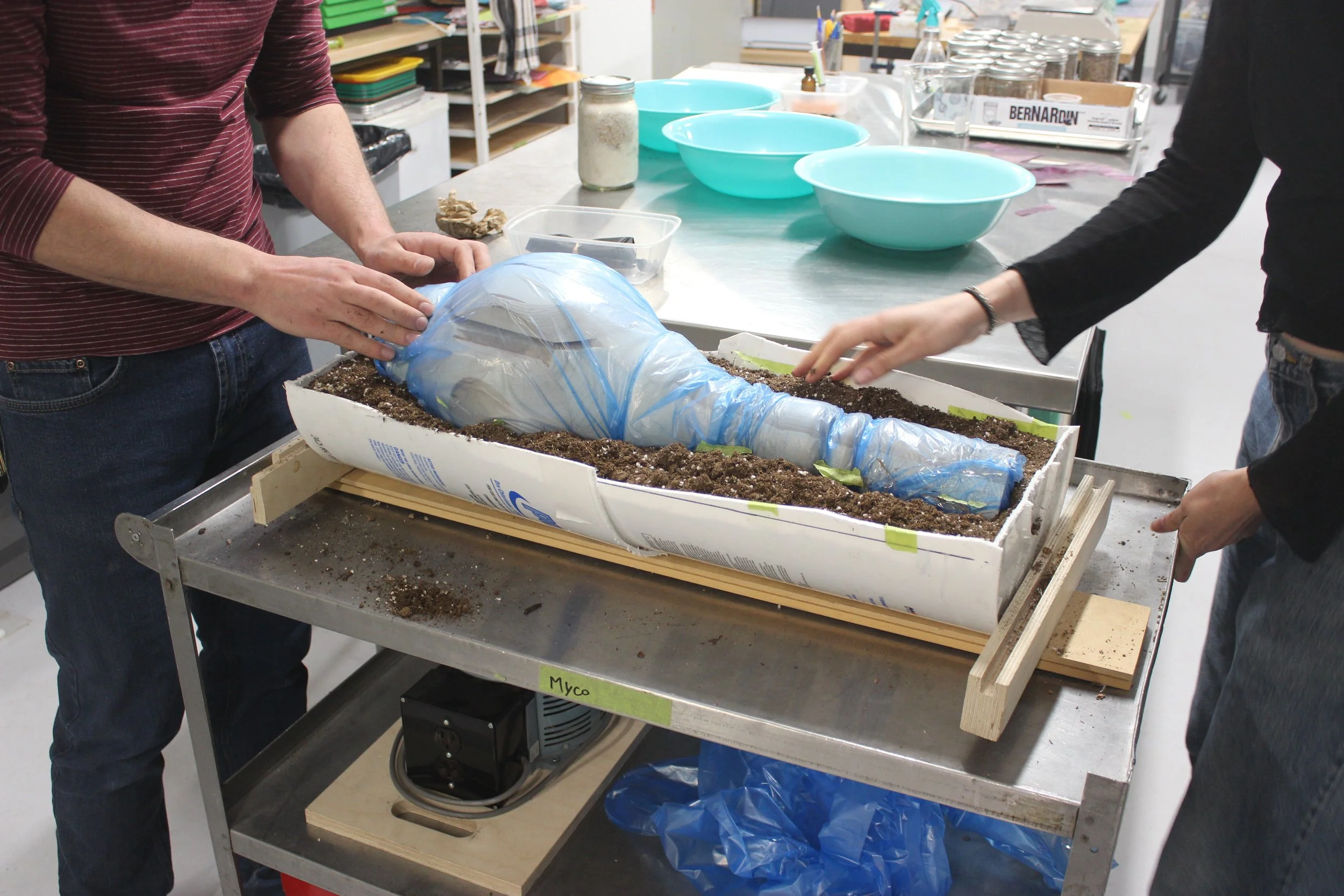
Creating a base for the vase to cast the top half
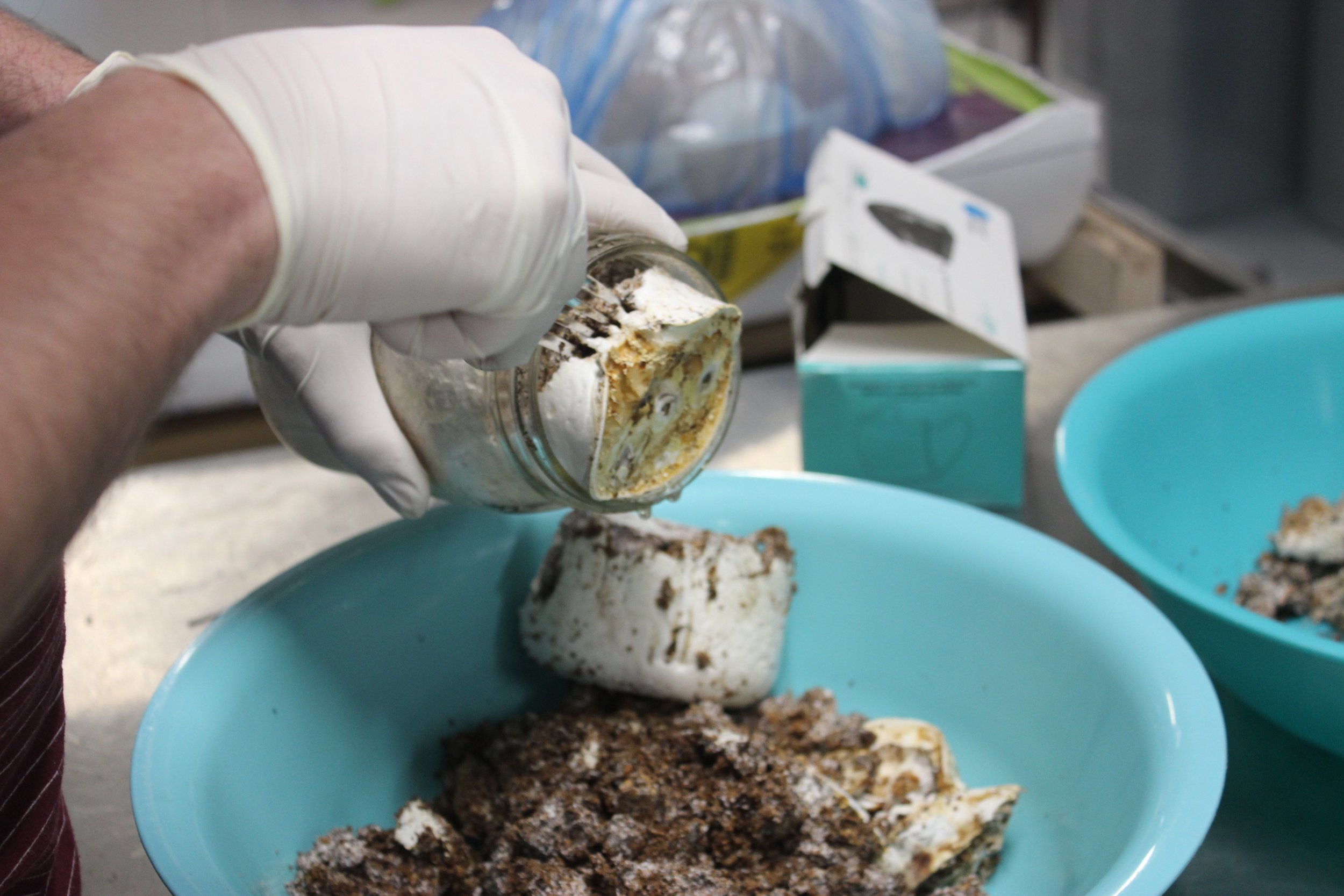
Removing the mycelium substrate out of jars where it had been incubating
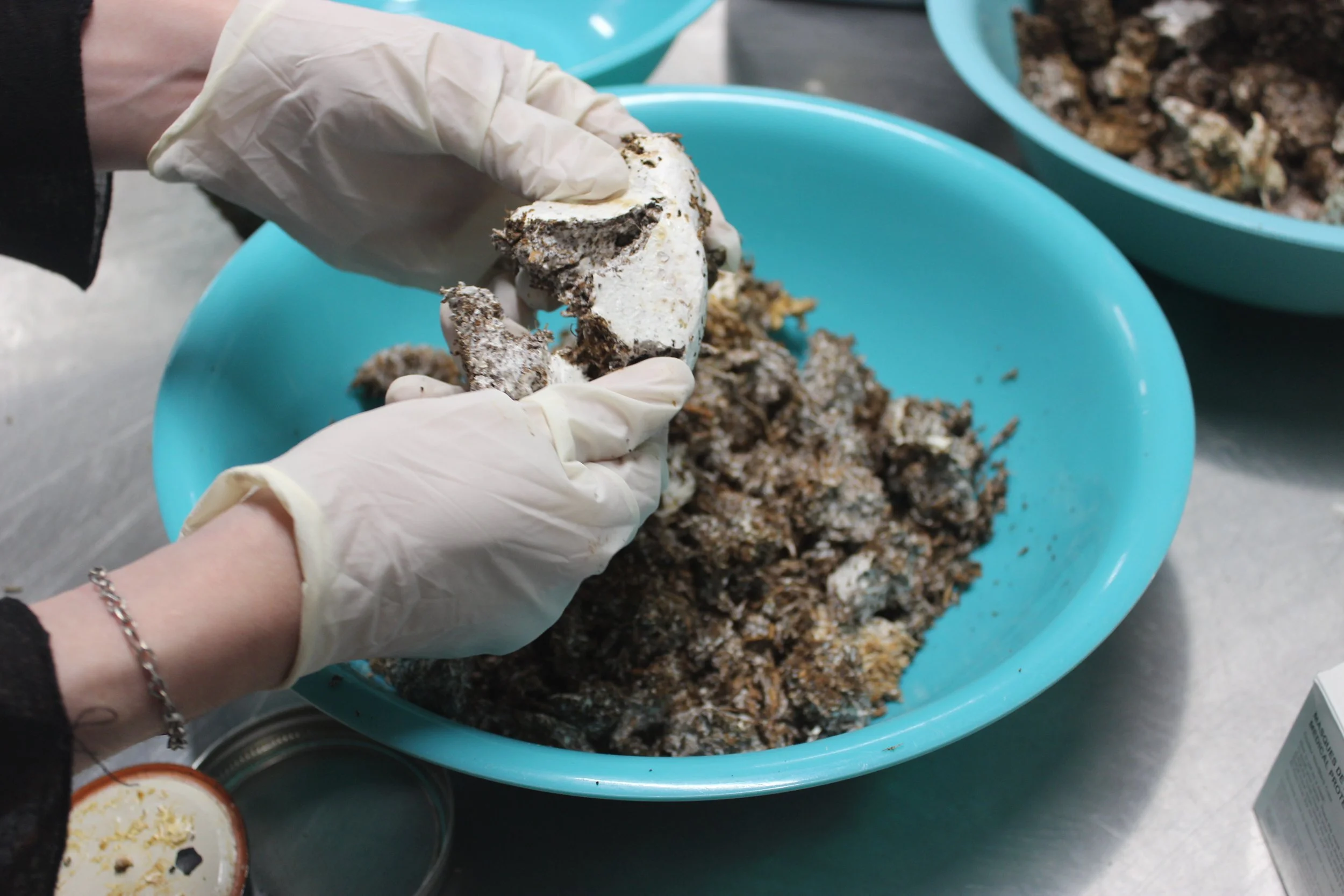
Breaking up clumps of mycelium
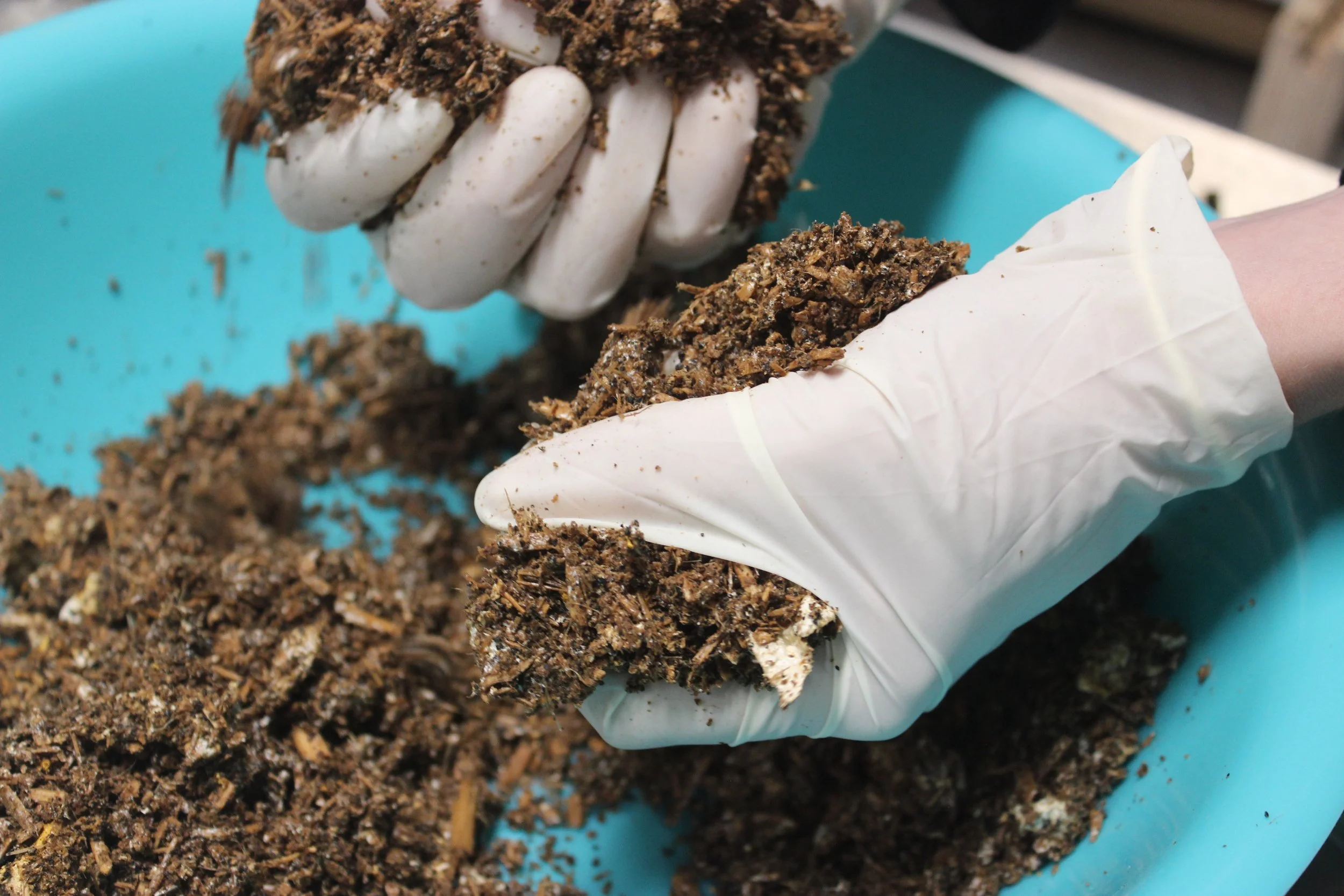
Mixing by hand to have a uniform texture
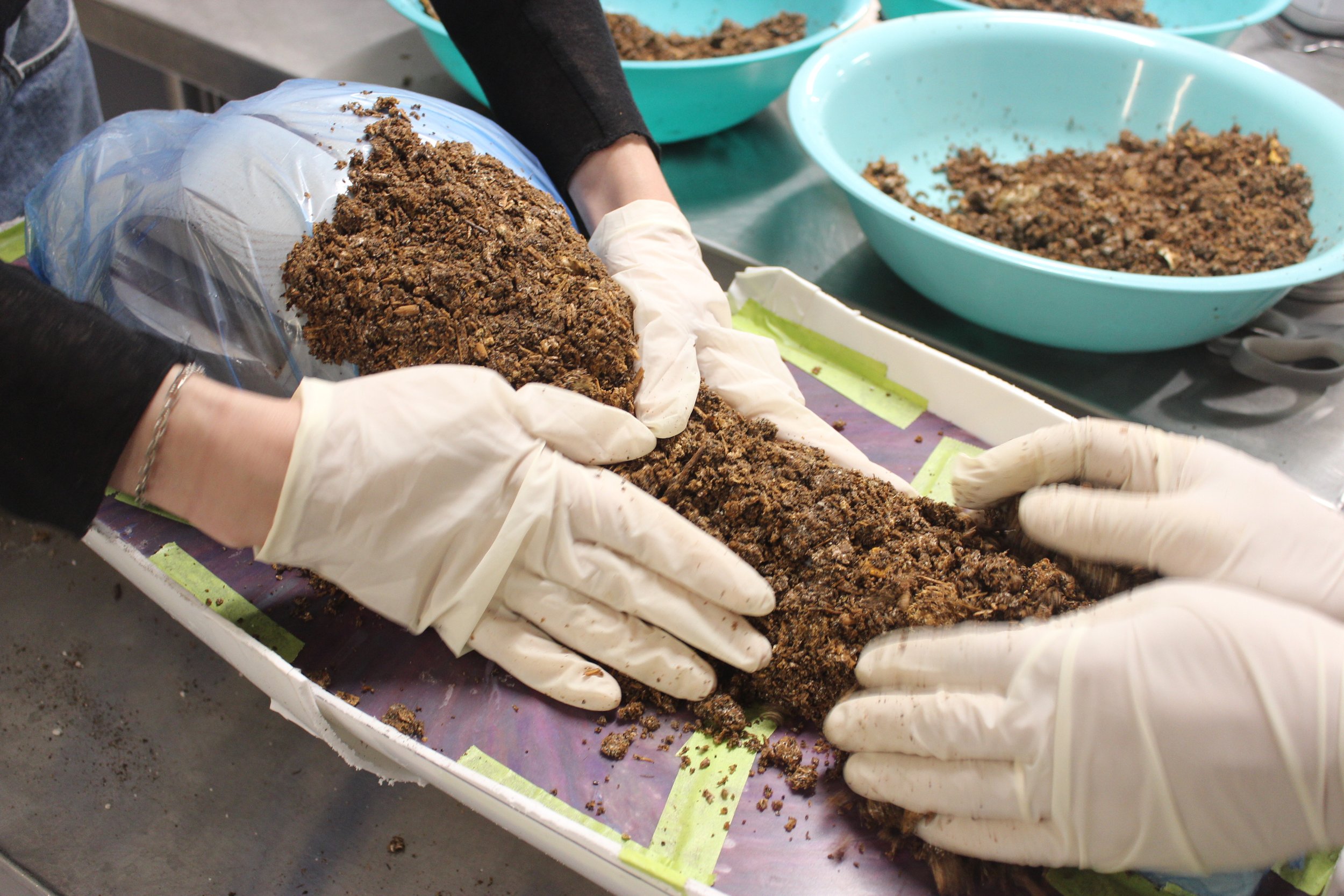
Applying the substrate over the vase
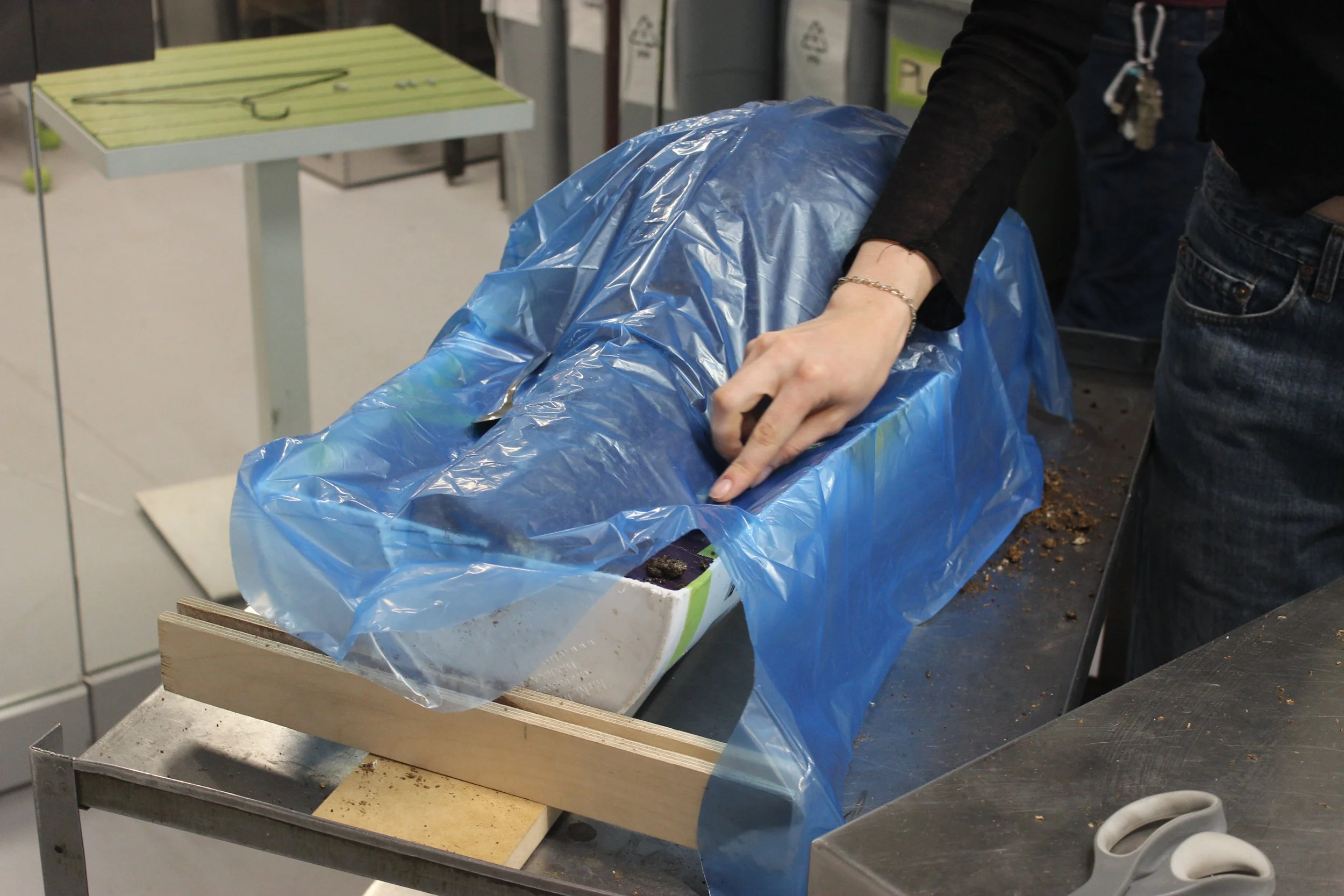
Covering the form with plastic to incubate the mycelium without exposure to oxygen
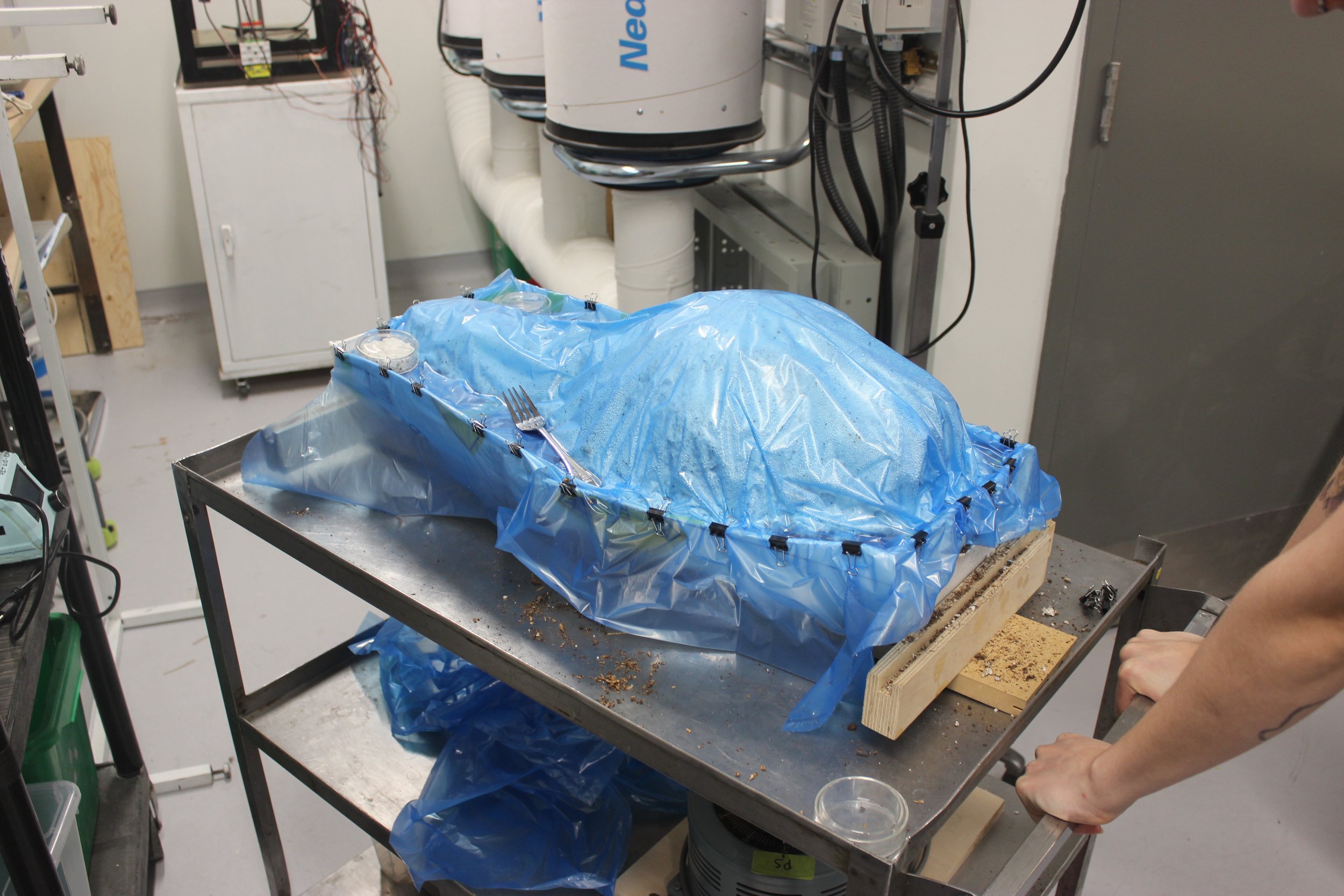
Mycelium grew and solidified after one week
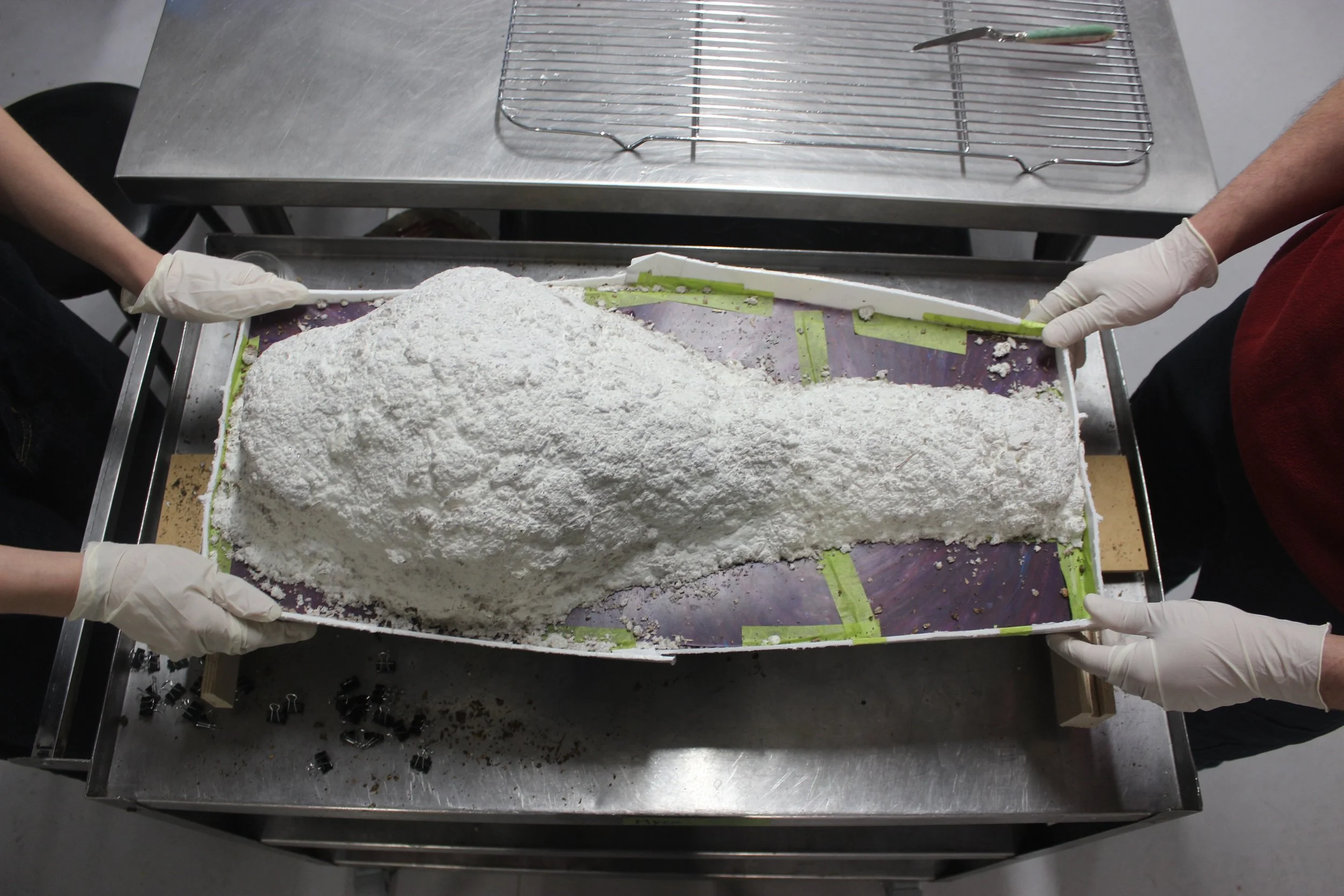
Mycelium created a dense layer around the vase
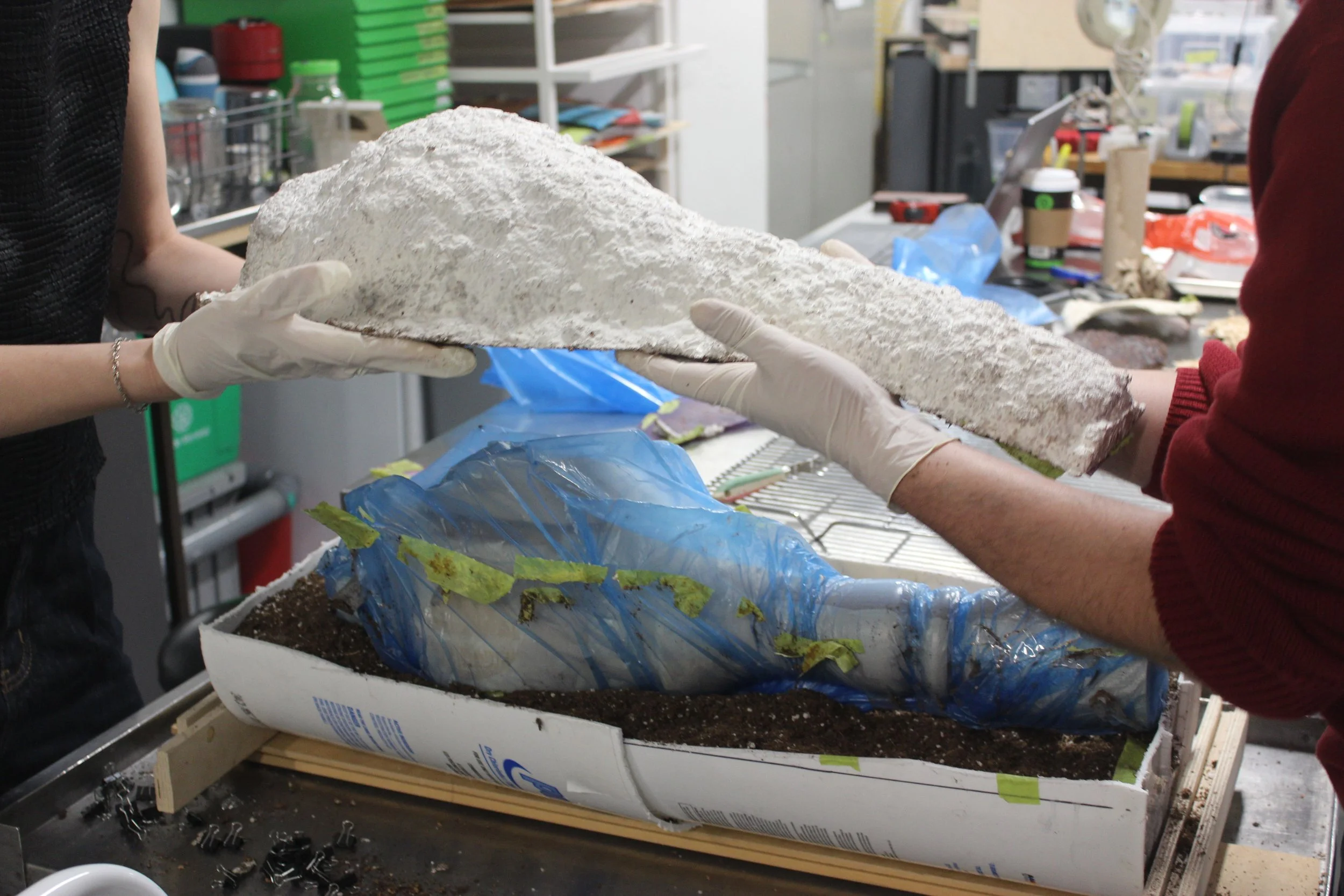
Lifting the solid mycelium form off of the vase
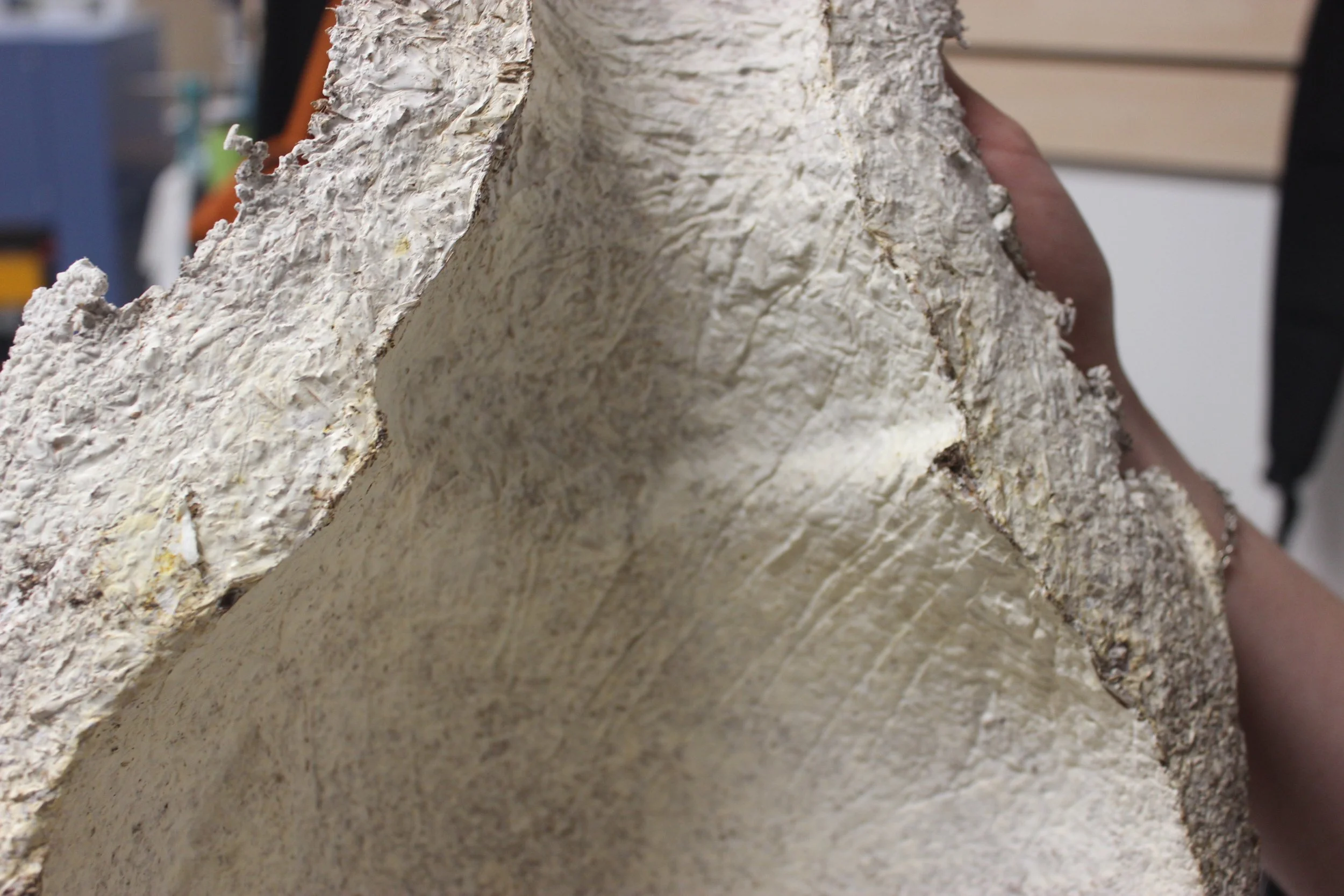
The mycelium replicates the details of the vase with perfect detail
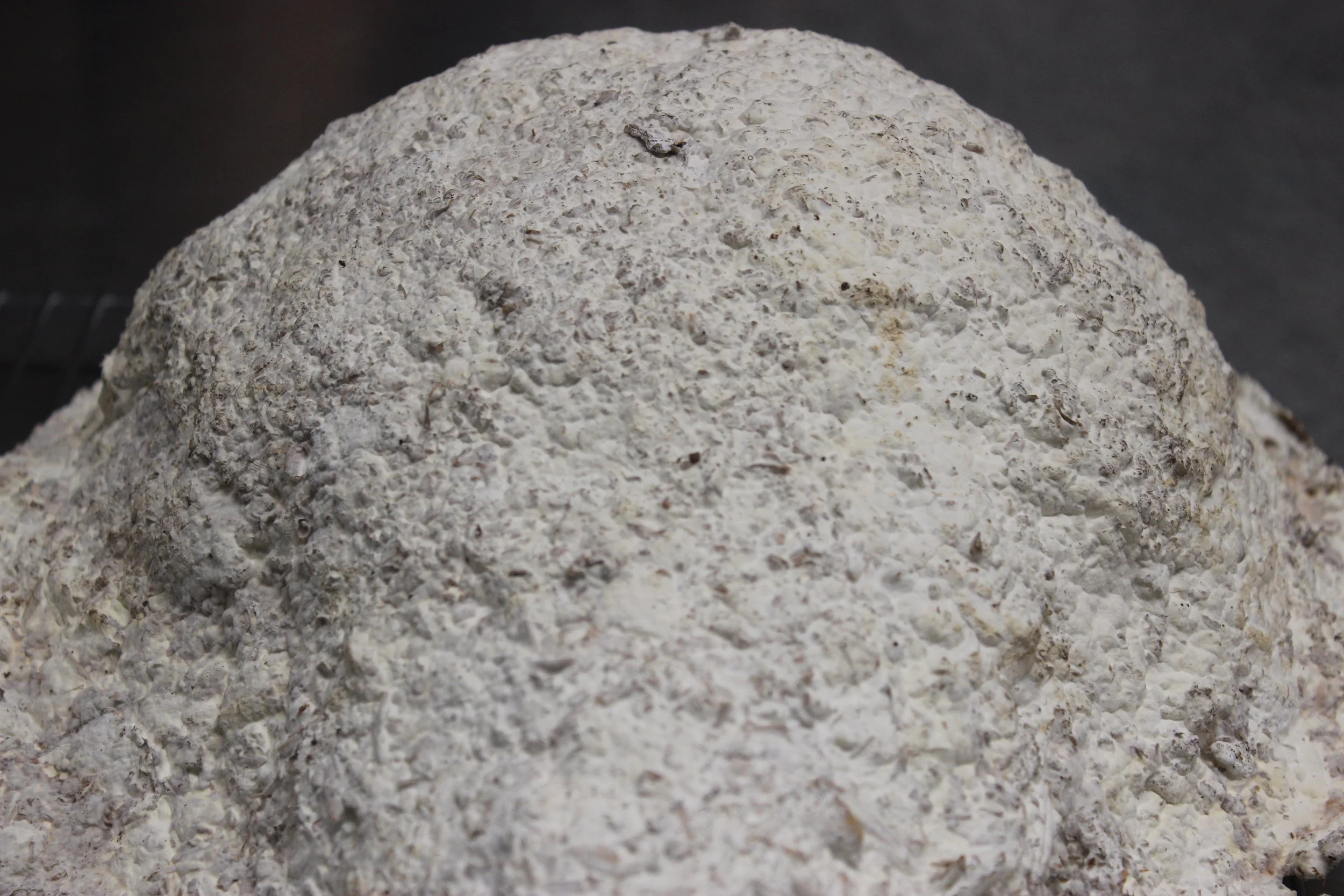
The outside has a bumpy texture
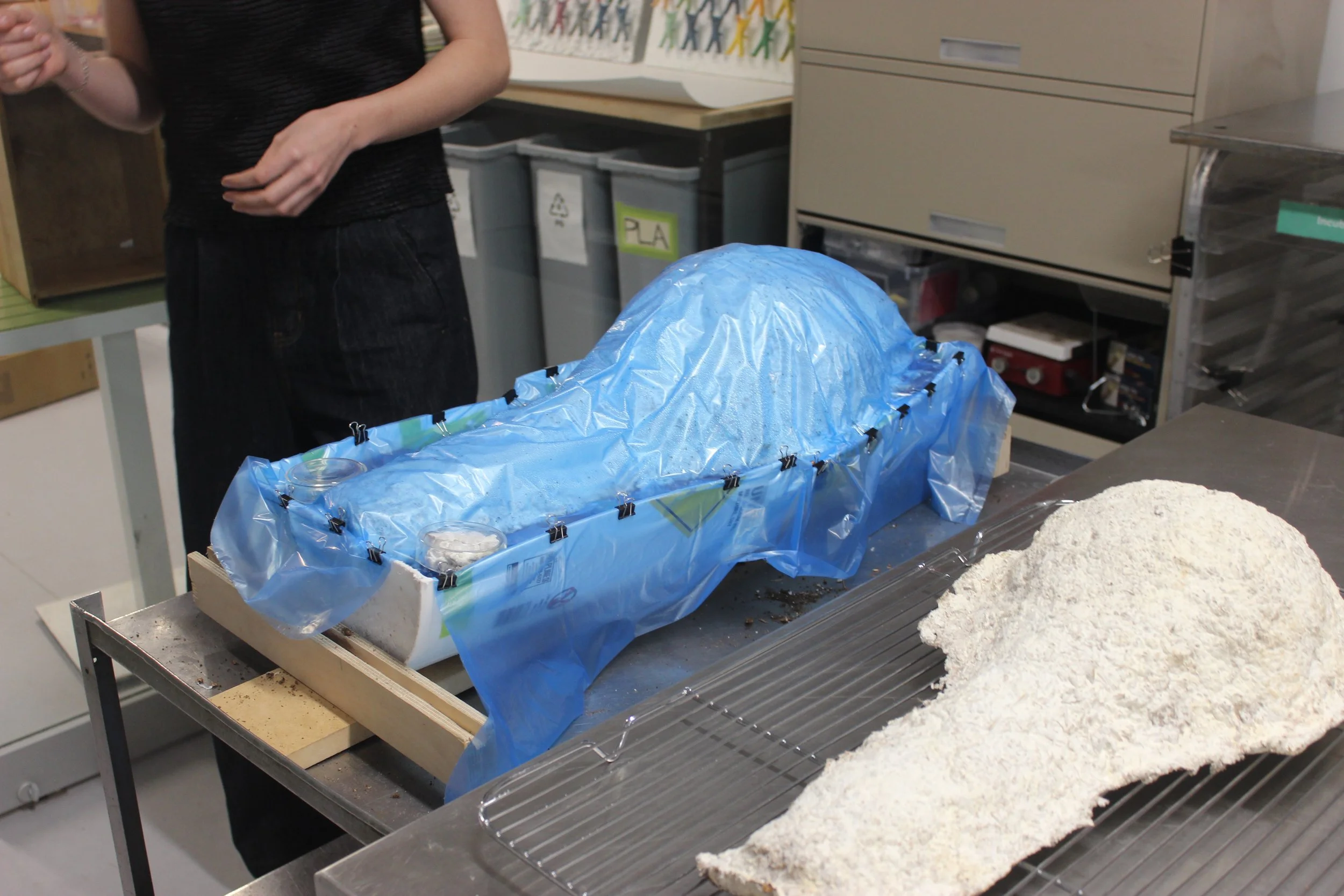
Made a second cast with the same method
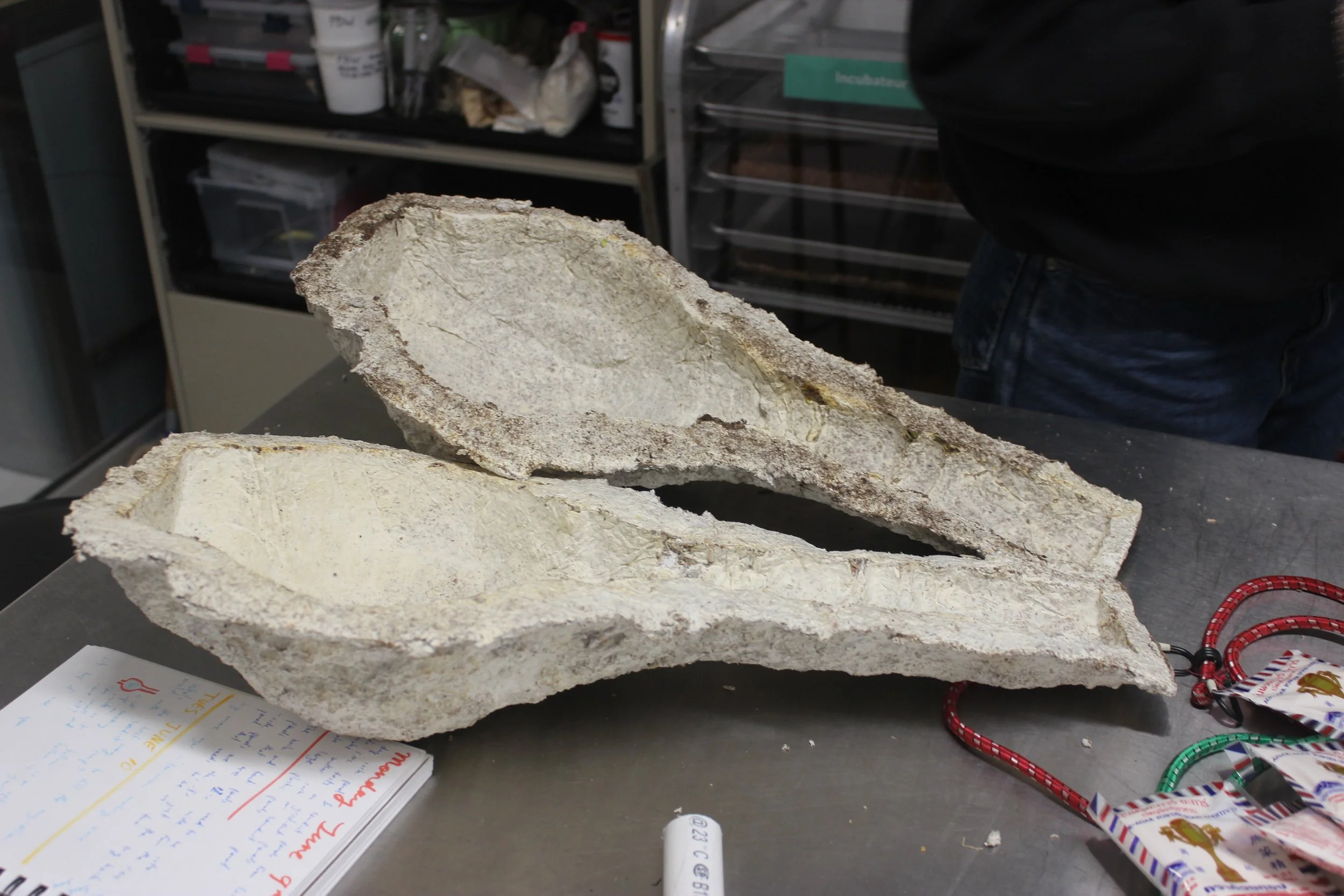
The two halves make the complete mold
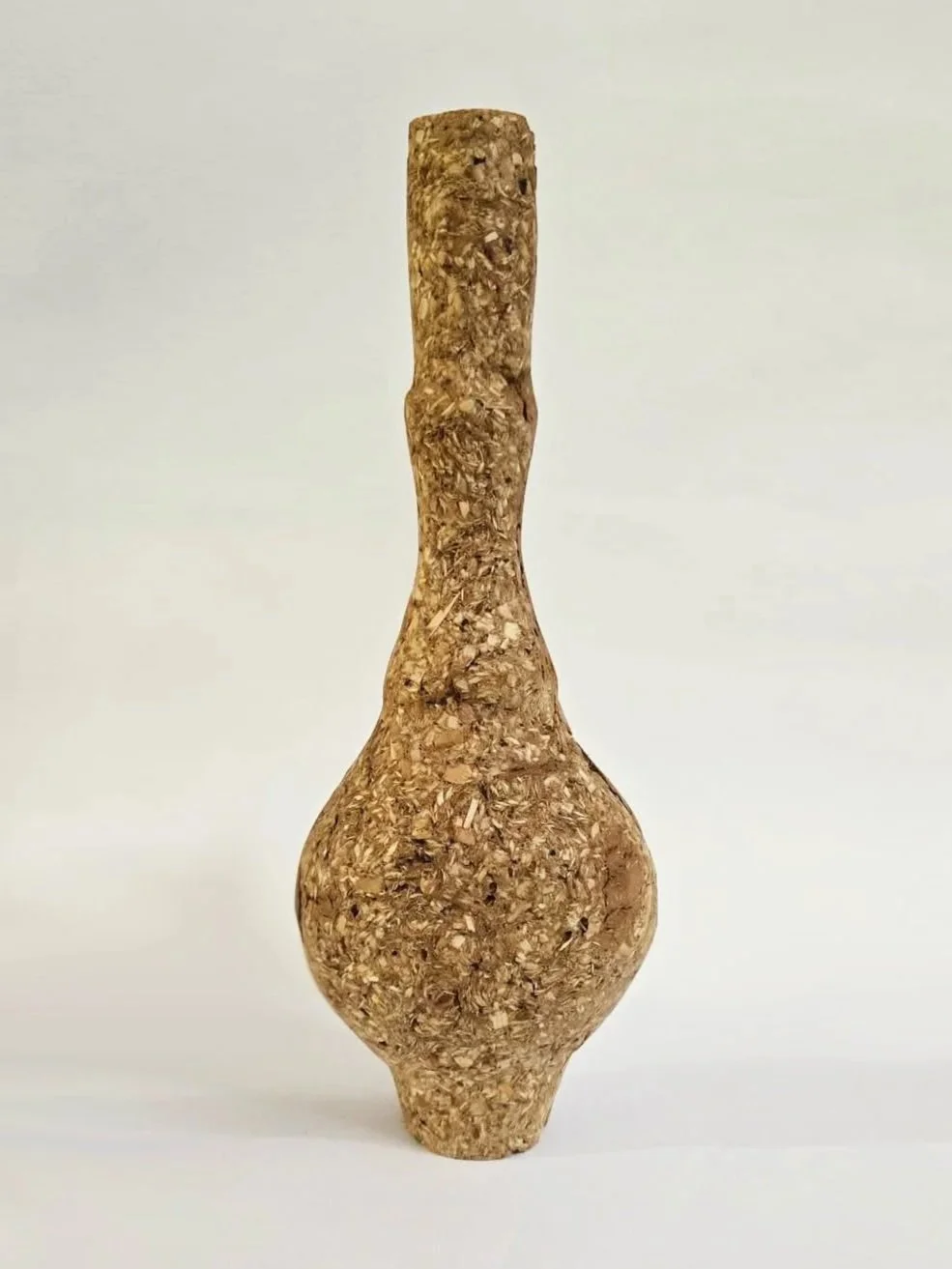
Sawdust Vase
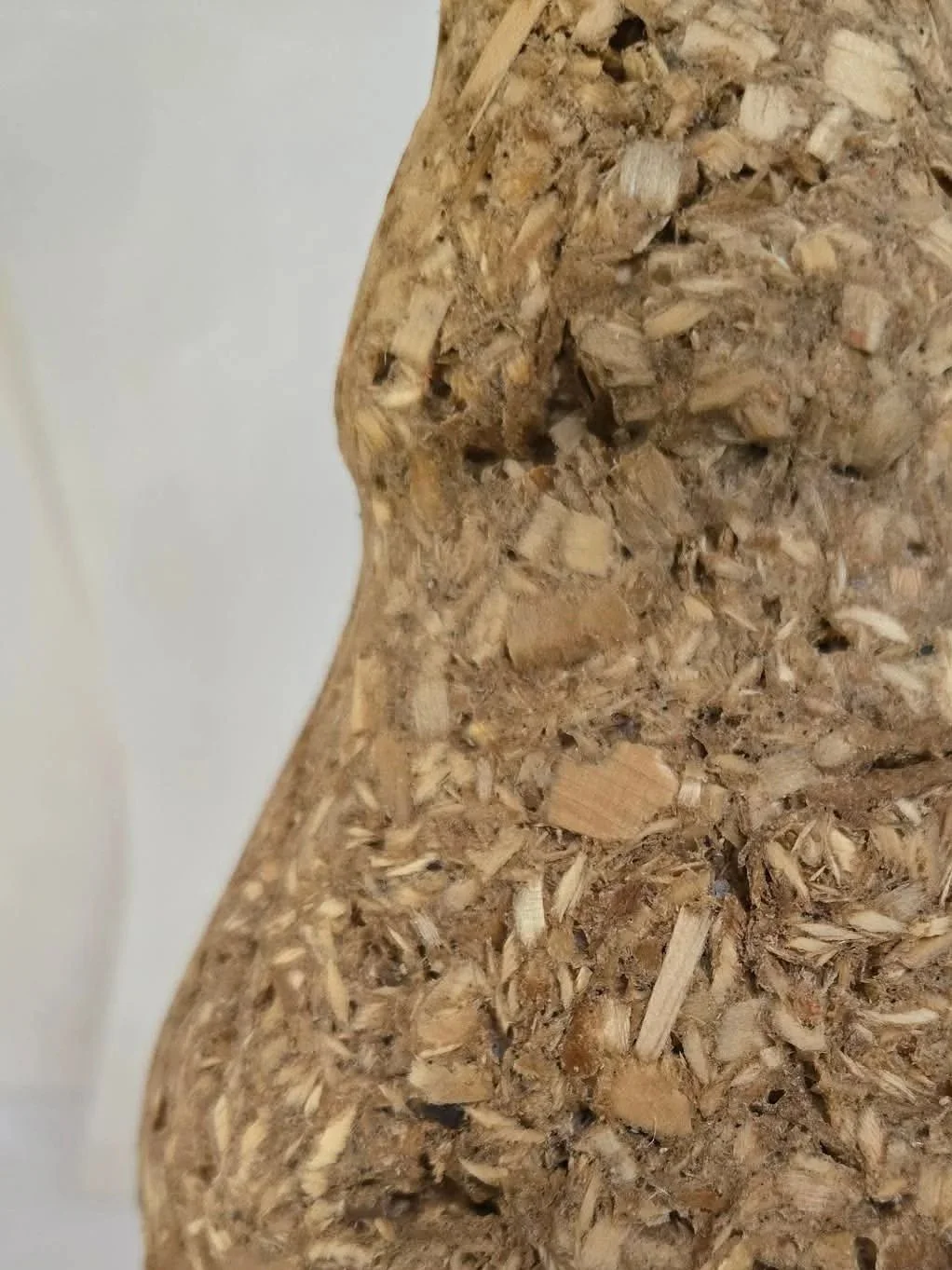
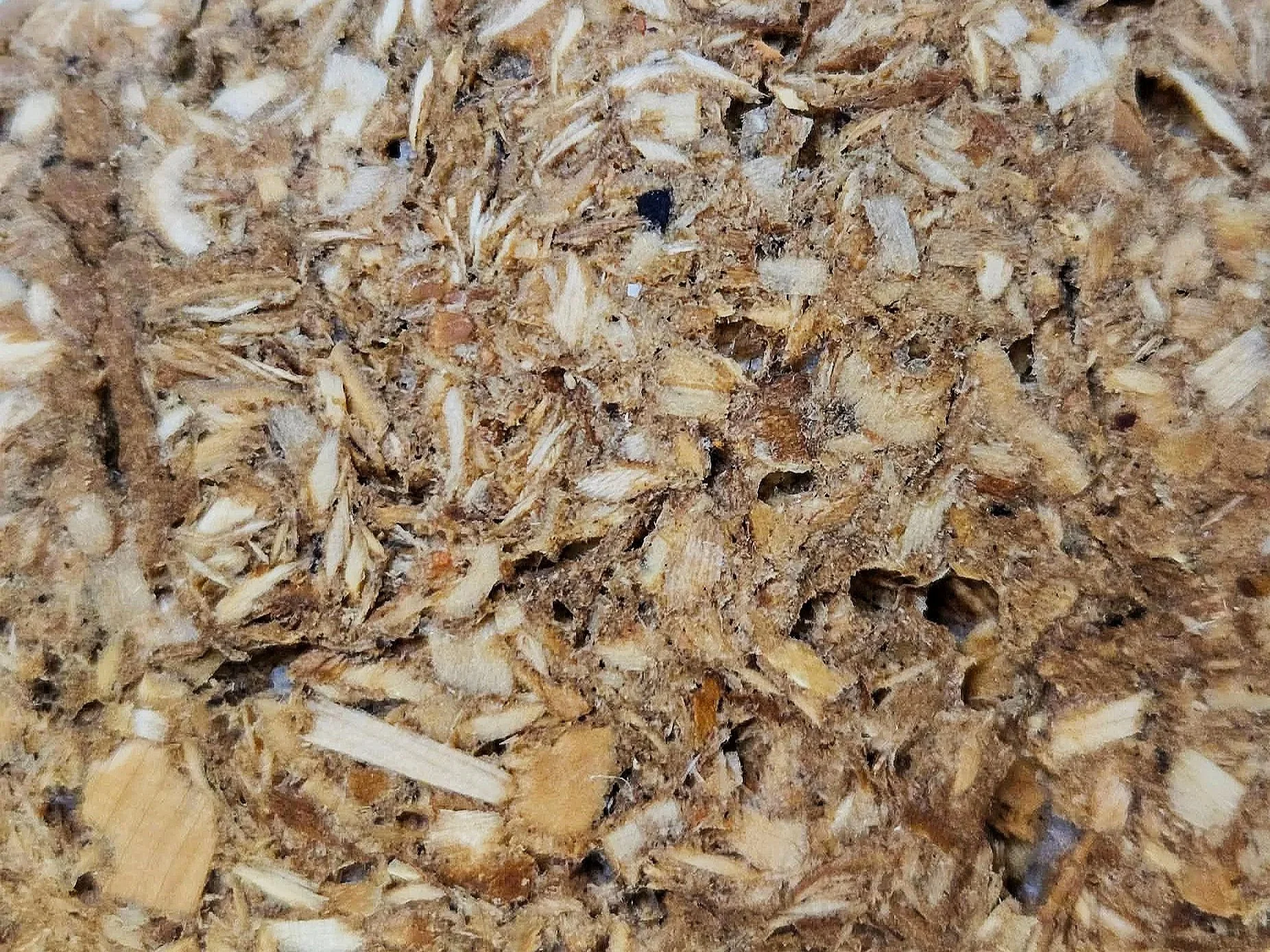
Using the wood shavings produced while carving the Offcuts Vase on the lathe, the Sawdust Vase converts this waste into a solid object. The wood flakes were taken from the woodshop to be reused instead of being disposed of. The large-flake sawdust was mixed with a small quantity of fine sawdust and a water with agar agar solution. The initial plan was to join the two mycelium cast sides together and fill it with the sawdust / binder mixture. This method was unsuccessful, as the liquid sank to the bottom of the vessel and did not bind the sawdust together. Subsequent attempts used only one side of the mycelium cast at a time to create two sides of the sawdust form. The solid sawdust halves were glued together with a mix of fine sawdust and liquid binder.
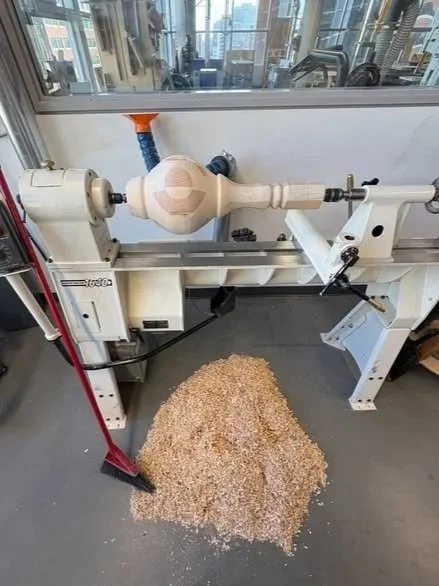
2026
20” x 6” x 6”
Sawdust, agar agar, beeswax polish
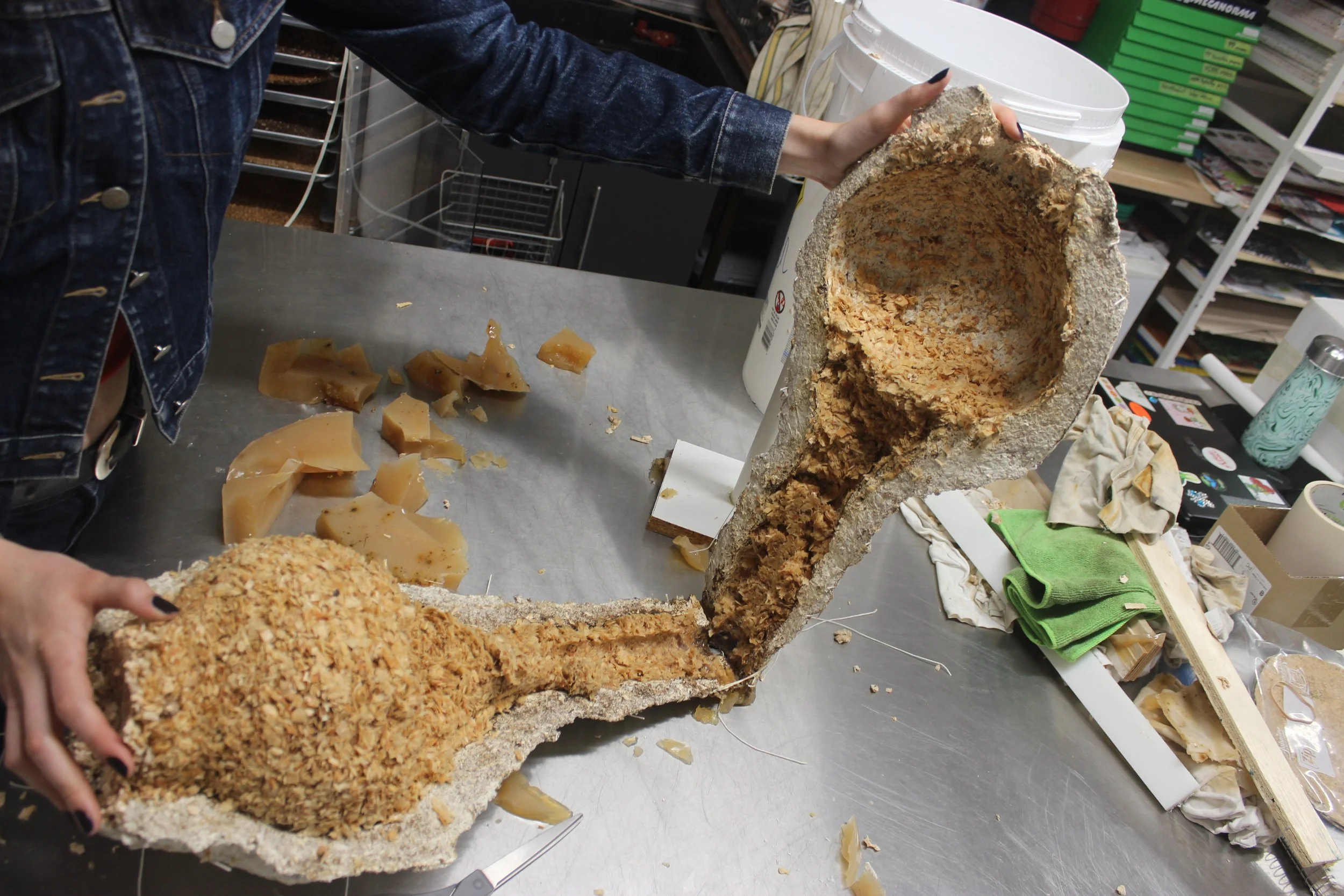
*First attempt, the sawdust stuck to the mycelium. It took four attempts to have a successful version.